
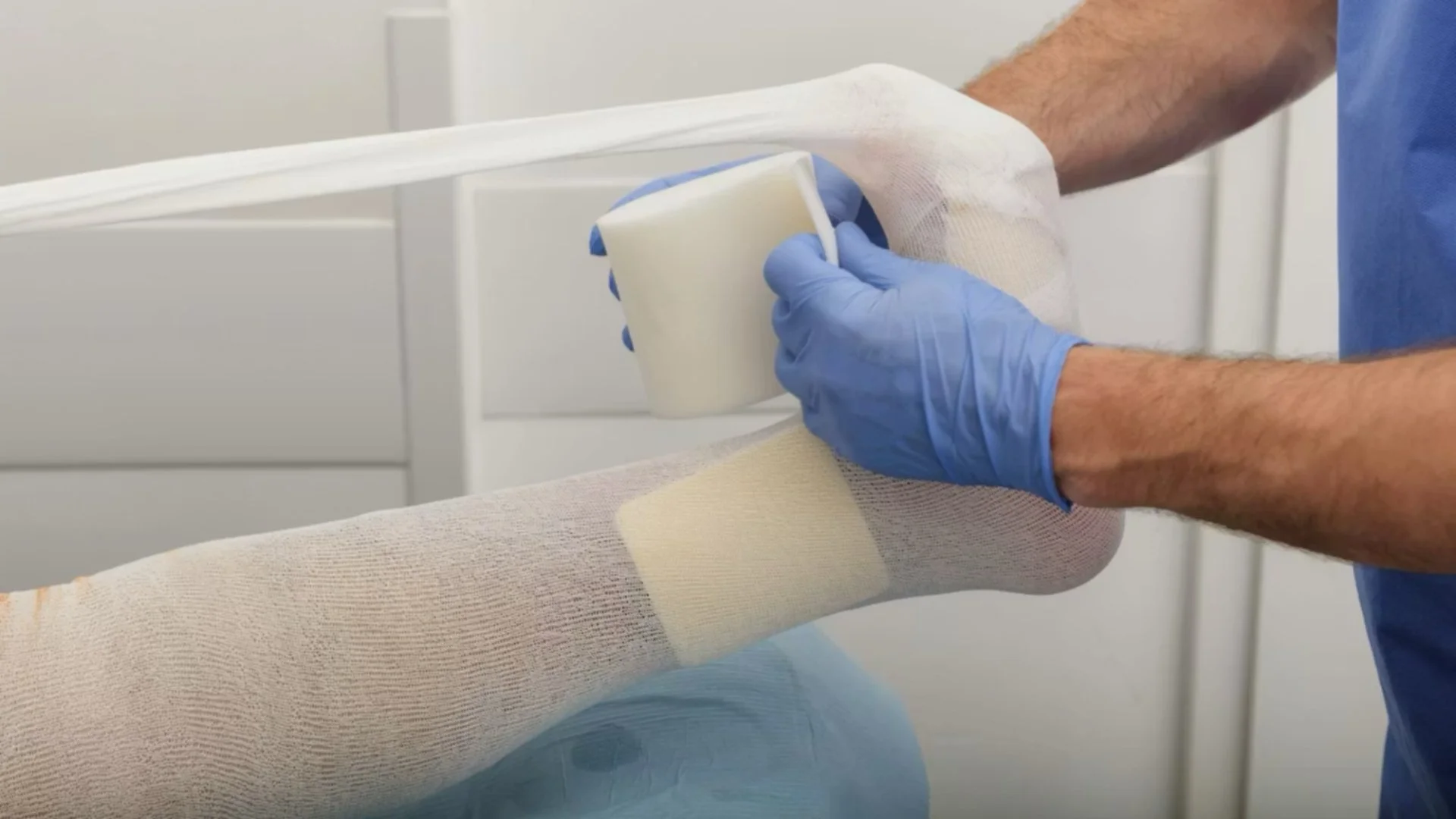
Light + sound therapy device for diabetic foot ulcers
Improving patient outcomes with an automated photo-biomodulation & extracorporeal shockwave therapy device for faster and better healing
Raising: Pre-Seed Round of €50K to enable €1.5M grant-funding
The problem: DFU is common, costly, and deadly
People affected annually
18.6M
Worldwide
Annual U.S. patients
1.6M
New DFU cases/year
People affected annually
18.6M
Worldwide
Economic burden (U.S.)
$9-13B
incremental annual payer cost above diabetes care
The opportunity scalable, repeatable clinic workflows that speed healing and reduce downstream complications

Clinic care today is time- and labor-intensive
Why DFUs remain hard to treat at scale
Standard care is effective but labor-heavy and advanced adjunct therapy options often don't fit routine workflows
Clinic reality
Debridement, offloading, dressings, infection control, vascular workups
High visit cadence; variable clinician technique
Slow closure → recurrence risk and frequent complications
Typical 24-week treatment duration
Common gaps with adjunct therapies
Bulky systems and setup time not aligned to outpatient workflows
Hard to target repeatably across clinicians and visits
High cost and complex supply chains can limit adoption
We need a more effective and automated adjunct DFU therapy that fits seamlessly into existing clinical workflows
Our solution
A point-of-care platform that brings repeatable and automated “sound + light” therapy into routine DFU visits, with high clinical efficacy
-

Dual, complementary modality
Photobiomodulation (PBM) and focused shockwave therapy (ESWT) delivered in one streamlined procedure
-

Standardized targeting
Foot-shaped cradle positions the wound consistently visit-to-visit, independent of operator technique
-

Automated therapy administration with AI
Image-based AI-targeting of treatment zones enables seamless automation of therapy
Designed to integrate into existing DFU clinical pathways in ≤20 minutes per visit
Our product: Lumipulse
AI-automated Light- and Sound Therapy device for DFUs
First-of-its-kind combination of photo-biomodulation therapy (PBM) and extracorporeal shockwave therapy (ESWT)
Automated therapy administration to reduce workflow burden
Fits seamlessly into existing outpatient DFU workflows as an adjunct therapy
Current state of product: Concept design, patent filed, existing miniaturized ESWT-technology licensed
Workflow: built for routine DFU clinic visits
Fast setup, standardized positioning, and automated therapy administration.
-

1. Position
Place foot into cradle (targets plantar ulcers)
-

2. Couple
Apply disposable coupling pad (acoustic consistency)
-

3. Treat (ESWT)
Focused ultrasound therapy pulses (~10 min)
-

4. Treat (PBM)
Red + NIR light dose (~10 min)
-

5. Document
Auto log: presets, dose, operator, timestamp
Designed for throughput
≤20 minutes add-on to a routine DFU visit
Automated therapy; only setup time required from clinic
Clinical rationale
Both ESWT and PBM have been clinically shown to improve DFU care – Lumisonix is combining & automating the two therapies in one device

Photobiomodulation (PBM)
Red + near-infrared light can modulate inflammation and support cellular energy processes (adjunct).
Controlled randomized DFU trials reports a tendency toward faster ulcer area reduction vs control with an odds ratio of 6.72

Focused ESWT (shockwave)
Mechanical stimulus that can promote tissue repair signaling, angiogenesis, and remodeling (adjunct to standard care).
Systematic review/meta-analysis reports across 10 RCTs show 1.57x higher complete healing rates vs standard of care
What Lumisonix adds vs. incumbent ESWT devices
Automated therapy → consistent energy delivery visit-to-visit.
Core thesis: Combining ESWT + PBM in a single clinic workflow will improve treatment effect due to complementary mechanisms of action and automated therapy will improve adoption rates
Appendix
Go-to-market
Total Addressable Market
Beachhead market size
Pricing
Summary of clinical literature on efficacy of PBM and ESWT
Competitive landscape
Intellectual Property